Beyond the Glass: How the Burj Khalifa Manages Cooling and Irrigation in the Dubai Heat
Published 4 months ago
Discover the Burj Khalifa engineering secrets behind its cooling and irrigation. Learn how the world’s tallest building harvests 15 million gallons of water through a unique condensate collection system.
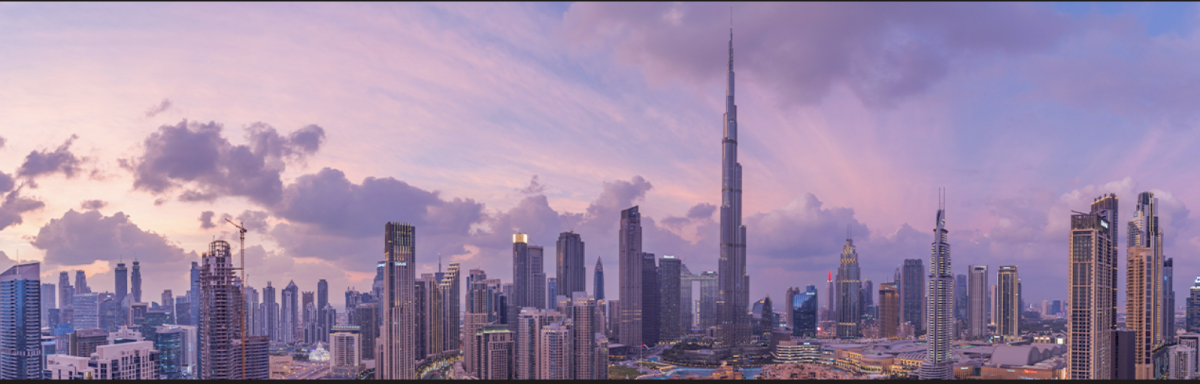
As one stands at the base of the Burj Khalifa, the enormity of the silver needle that pierces the Arabian sky is awe-inspiring. However, as the blistering sun beats down on Dubai with temperatures soaring over 45°C, a different kind of wonder comes alive. Behind the gleaming surface is a "smart" machine that is alive with ingenuity and defies the desert climate.
In 2026, living sustainably in the UAE has moved beyond being a "green" trend or a catchy hashtag; it’s now the quiet heartbeat of how we actually live, breathe, and find comfort in the desert heat. Whether it’s the peace of mind that comes from a lower DEWA bill or the pride of seeing our city lead the world in innovation, sustainability has become our new standard for a life well-lived. And the Burj Khalifa is the ultimate example of this revolution. To most people, it is a monument to hubris and altitude; to engineers, it is a masterclass in the recycling of resources. By literally siphoning water from the desert air and deflecting the fury of the sun with special "skin," the Burj Khalifa is an eco-friendly wonder.
The "Water Factory" in the Sky: Condensate Collection
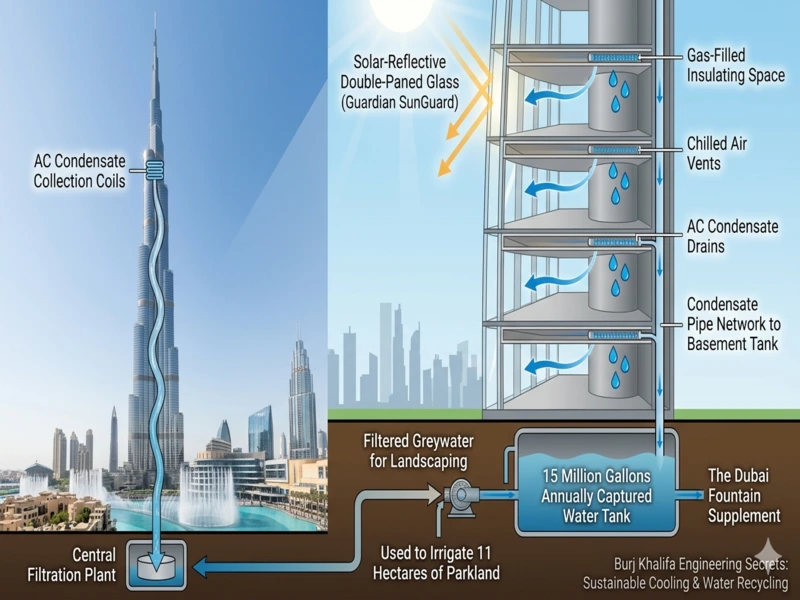
One of the most mind-boggling facts about the Burj Khalifa isn't its height, but its ability to act as a giant dehumidifier. In a region where every drop of water is precious, the tower has turned a byproduct of cooling—condensation—into a massive liquid asset.
How It Works
Dubai’s humidity can be stifling, often hovering near 90%. When the tower’s massive cooling system chills the indoor air, the moisture in the outside air hits the cold cooling coils and liquefies. Instead of letting this water drip away or evaporate, the Burj Khalifa utilizes a Condensate Collection System.
Massive Yield: The system harvests roughly 15 million gallons of water annually.
The Journey: This "captured" water is funneled through a dedicated drainage network into a massive holding tank in the basement car park.
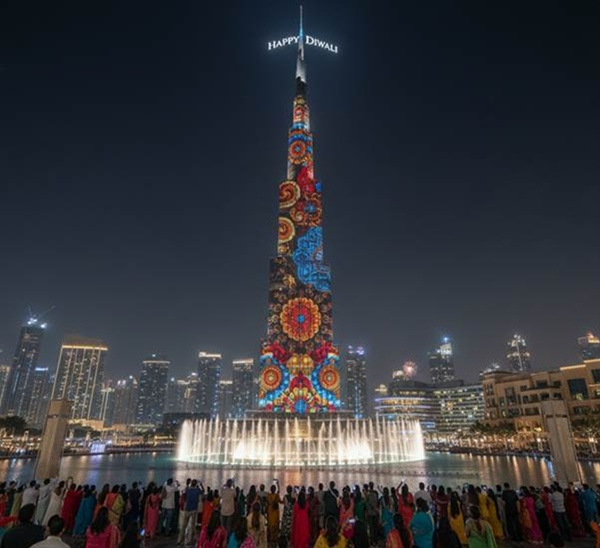
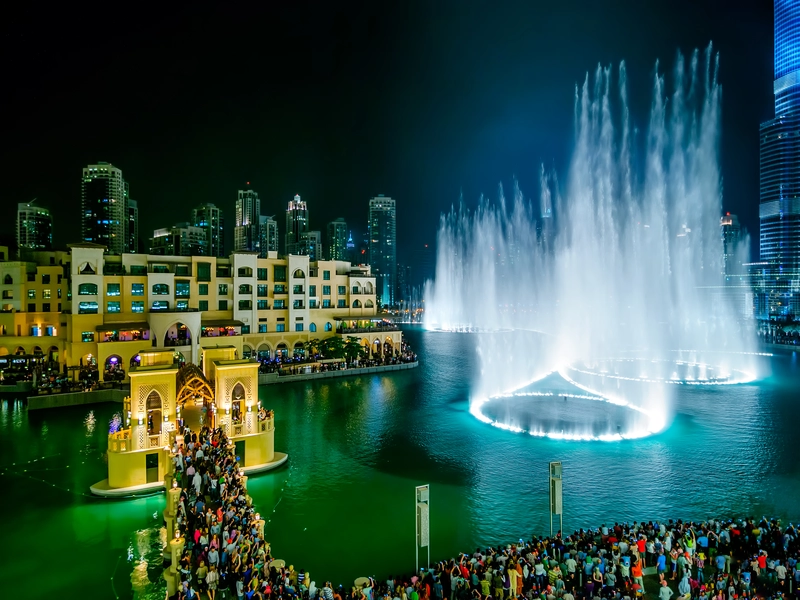
Purposeful Reuse: This water isn't sent to the sewers. It is used exclusively to irrigate the 11 hectares of lush green gardens and parkland surrounding the tower, and even supplements the spectacular Dubai Fountain.
Scaling the Impact
To put 15 million gallons into perspective, imagine filling 20 Olympic-sized swimming pools every year just from the air-conditioning "sweat" of a single building.
The Solar-Reflective Skin: Engineering the Cool
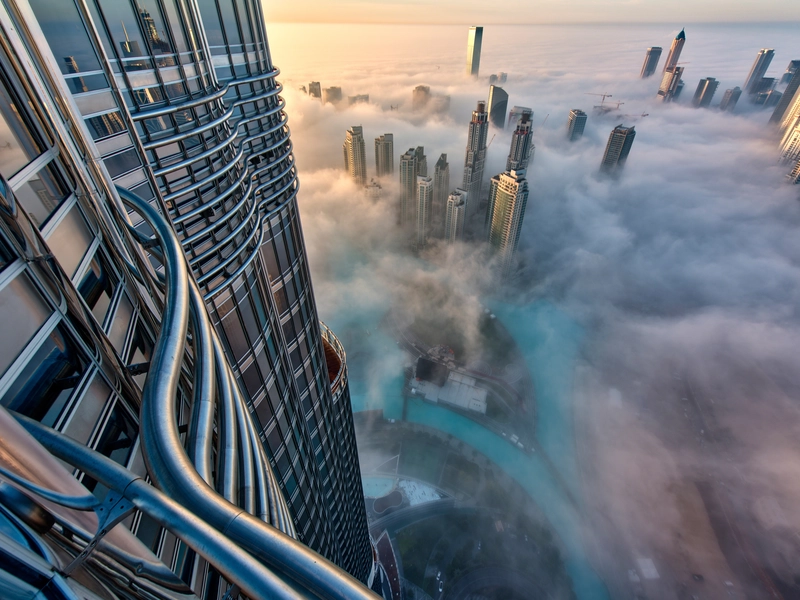
If the condensate system is the tower’s "thirst quencher," its exterior cladding is its "armor." The Burj Khalifa is wrapped in 26,000 hand-cut glass panels, but these aren't your average windows.
High-Tech Glazing
The tower uses a specialized Solar-Reflective Glazing (Guardian SunGuard and ClimaGuard). This double-paned glass acts as a high-performance filter for the sun’s rays.
Infrared Rejection: The outer pane is coated with a thin silver layer that reflects the sun’s infrared (heat) radiation while allowing visible light to pass through.
UV Protection: It blocks a significant portion of harmful UV rays, preventing the interior "greenhouse effect" and protecting the high-end furniture and art inside.
Thermal Break: A vacuum or gas-filled space between the glass layers acts as an insulator, ensuring the 50°C exterior heat stays out and the 24°C interior chill stays in.
Feature | Impact on Efficiency |
Silver-Coated Glass | Reduces solar heat gain by over 15%. |
District Cooling | Uses 3.3°C chilled water from a central plant for 10,000 tons of cooling. |
Ice Storage | Creates "ice slurry" at night (cheaper energy) to cool the building by day. |
The 2026 Perspective: AI and Predictive Maintenance
As we navigate 2026, the Burj Khalifa has integrated AI-driven management systems to further optimize its cooling. Sensors throughout the building detect real-time occupancy and sun position, adjusting the airflow to specific zones. This prevents "over-cooling" empty rooms, further slashing DEWA (Dubai Electricity and Water Authority) costs and reducing the building's carbon footprint.
Why This Matters for the UAE
The success of the Burj Khalifa’s sustainability model has paved the way for the UAE’s Net Zero 2050 strategy. It proved that "mega-tall" doesn't have to mean "mega-wasteful." By integrating these systems, the tower saves millions of Dirhams in utility costs while maintaining its status as a lush, green oasis in the heart of a desert metropolis.
Conclusion
The Burj Khalifa is more than just a selfie backdrop; it is a pioneer of high-performance architecture. By turning the harsh Dubai humidity into a source of life for its gardens and utilizing space-age glass to repel the desert heat, it sets a precedent for every skyscraper that has followed. In a world increasingly focused on climate resilience, the Burj Khalifa remains—quite literally—above the rest.
FAQs
Q1. Is the water collected from the AC safe to drink?
Ans) While the condensate is very pure (essentially distilled water), it is not used for drinking. It is primarily used for landscaping and the Dubai Fountain. However, some of the tower's wastewater is processed through Reverse Osmosis to make it safe for secondary uses.
Q2. How often do they clean the 26,000 glass panels?
Ans) It takes a dedicated team of "spider-men" window cleaners about 3 to 4 months to clean the entire tower from top to bottom. Once they finish, they usually start all over again!
Q3. Does the Burj Khalifa use solar panels for power?
Ans) Yes, but not for the whole building. It uses a large array of solar thermal collectors to heat approximately 140,000 liters of water per day for the residents and the hotel, significantly reducing electrical demand.
Q4. How does the building handle the "Chimney Effect"?
Ans) Due to its height, air pressure differences could create massive drafts. The building uses high-tech "pressure-tracking" systems and airlocks to ensure that when you open a door on the 100th floor, you aren't met with a hurricane-force wind.
Q5. How much money does the reflective glass actually save?
Ans) While exact figures are private, engineers estimate the specialized coating reduces the cooling load by nearly 20%, saving millions of kilowatt-hours in electricity every year.
By Chithra Sooraj (Digital Marketing Executive)